Valuation Quotes

15 Valuation Quotes About Price, Value, and Margin of Safety

The best valuation quotes survive because they condense long experience into language you can remember when judgment matters most. This collection focuses on enduring ideas around valuation, price, value, cash flow, not as slogans to admire from a distance, but as working principles that can improve how readers analyze businesses, think about markets, and make decisions over time. A truly useful quote does more than sound wise. It clarifies what deserves attention when headlines become noisy, prices become emotional, or a complex decision needs to be reduced to first principles. That is why serious investors and business builders keep returning to memorable lines from disciplined thinkers. They use them to sharpen checklists, reinforce patience, and remember what usually matters more than the latest market move. Each quote on this page is paired with context, practical application, and a deeper explanation so the lesson does not remain abstract. Read these selections slowly. Ask what each one implies about process, valuation, risk, incentives, or temperament. The goal is not to collect clever sentences. The goal is to build a sturdier mental framework for acting well under pressure. Over time, the readers who benefit most from pages like this are the ones who revisit durable ideas until they become habits. Capital compounds, but so does judgment. Returning to the right ideas again and again is one way thoughtful readers improve both.

Featured collection

15 Ideas Worth Revisiting

A curated set of 15 quotes, each paired with context, practical application, and deeper insight.

1 of 15
Preferred stock investors savor, rather than fear, a period of falling market prices.

Core idea

Falling market prices let preferred stock investors lock in higher yields and more shares for the same money, so they welcome downturns as buying opportunities instead of fearing losses.

Practical application

In real life, treat market drops as sales: patiently buy more quality preferreds at higher yields, focus on income and discipline, not short-term price swings or fear.

Why it matters

The insight is that preferred stock investors view price declines as chances to buy higher-yield income streams cheaply, prioritizing long-term cash flow over short-term market value fluctuations.


Bargain prices are those that have high earnings yields.

Core idea

Stocks are real bargains when their earnings compared to price are unusually high, meaning you pay little for each dollar of profit and get superior value.

Practical application

Apply this by favoring stocks with unusually high earnings yields, meaning you systematically buy solid businesses when they are cheap relative to their profits and future potential.

Why it matters

This quote reveals that true bargains arise when a companys strong, sustainable earnings are temporarily mispriced, letting disciplined investors buy superior cash flows at deeply discounted prices.

Ignore daily price movements.

Core idea

Buffett urges investors to ignore short-term stock price fluctuations and instead focus on a companys long-term business fundamentals, intrinsic value, and sustained competitive advantages.

Practical application

Apply this by reviewing businesses quarterly, not daily; track earnings, cash flow, and competitive position, and invest regularly instead of reacting to every price swing or headline.

Why it matters

The insight is that real investment success comes from judging businesses like private owners would, by long-term economics and durability, not by short-term stock market noise.

Value investing means really asking what are the best values, and not assuming that because something looks expensive that it is, or assuming that because a stock is down in price and trades at low multiples that it is a bargain.

Core idea

True value investing demands independent analysis of a business's intrinsic worth, rejecting superficial judgments based solely on high prices or low multiples and apparent cheapness.

Practical application

Apply Millers idea by digging into business quality, durability, and cash flows yourself, instead of blindly chasing low PEs or avoiding strong companies just because their stocks look pricey.

Why it matters

Millers quote highlights that genuine value investing is about discerning true business worth through independent analysis, not relying on surface metrics like price levels or conventional valuation multiples.

Speculators buy and sell securities based on whether they believe those securities will next rise or fall in price.

Core idea

The core idea is that speculators focus solely on predicting short-term price movements, trading on expected rises or falls, rather than analyzing a securitys underlying long-term value.

Practical application

Apply this by refusing to trade on short-term predictions; instead, study businesses deeply, buy with a margin of safety, and hold while prices swing around true underlying value.

Why it matters

It reveals that real investing begins where price guessing ends, shifting attention from market moods to intrinsic value, durability of cash flows, and rational, patient capital allocation.

A stock is not just a ticker symbol or an electronic blip; it is an ownership interest in an actual business, with an underlying value that does not depend on its share price.

Core idea

A stock is not just a moving price on a screen - it represents ownership in a real business with assets, earnings, and competitive realities. The quote anchors investing in economic substance.

Practical application

Before buying a stock, ask whether you would be comfortable owning the entire company. This mindset pushes you toward understanding the business model instead of obsessing over the ticker.

Why it matters

The deeper message is that speculation begins when ownership thinking disappears. Graham is trying to move the reader away from trading mentality and back toward business analysis.

Value investing combines the conservative analysis of underlying value with the requisite discipline and patience to buy only when a sufficient discount from that value is available.

Core idea

Value investing means carefully estimating a businesss true worth, then patiently waiting to buy only when its market price is significantly below that conservatively assessed intrinsic value.

Practical application

Apply this by researching businesses conservatively, valuing them realistically, then waiting with discipline and patience to buy only when the market offers a clear, meaningful discount.

Why it matters

The special insight is that investing success comes from rigorous valuation plus emotional discipline to act only when markets misprice quality businesses at clearly favorable, risk-buffering discounts.

Value is not a number - it's an opinion. When optimism prevails, prices can exceed value. When pessimism dominates, prices can fall below value.

Core idea

Value is subjective and shifts with investor psychology; market prices swing above or below true worth depending on prevailing optimism or pessimism, so price and value often diverge.

Practical application

Use this quote by constantly asking what assumptions and emotions drive current prices, then buy only when your independent estimate of value comfortably exceeds the market price.

Why it matters

The quote reveals that value is a moving target shaped by crowd psychology, so disciplined investors can profit by exploiting emotional mispricings between perception and underlying worth.

The idea is to find a mispriced bet.

Core idea

The core idea is to seek situations where the odds of success and potential payoff are much better than the price suggests, creating positive expected value over time.

Practical application

In real life, apply this by patiently studying businesses to find rare cases where quality and future growth far exceed the current price, then investing decisively yet prudently.

Why it matters

Mungers insight is that sustained investing edge comes not from predicting markets broadly, but from selectively exploiting rare, obvious mispricings where expected value is overwhelmingly in your favor.

The best investors focus on how businesses actually generate cash.

Core idea

The quote emphasizes that truly successful investors look beyond accounting earnings to understand the real economic engines and cash flow fundamentals that sustainably drive a businesss long-term value.

Practical application

To become a better investor, dig into how a company truly generates and uses cash, since durable, growing cash flows ultimately determine its real value and investment merit.

Why it matters

This quote highlights that superior investing hinges on grasping a businesss true cash economics, not just reported profits, revealing sustainable value, risk, and competitive durability beneath surface metrics.

Scarcity drives value.

Core idea

When something is scarce or hard to get, people value it more, so limited supply or uniqueness becomes a powerful driver of higher prices, demand, and opportunity.

Practical application

As an investor, seek businesses with genuine scarcity - limited supply, unique assets, or durable competitive advantages - because constrained availability often supports stronger pricing power, margins, and long-term returns.

Why it matters

Scarcity is not just a constraint but a strategic asset; when supply is truly limited, value concentrates, enabling outsized pricing power, bargaining leverage, and long-term wealth creation.

The stock market is filled with individuals who know the price of everything, but the value of nothing.

Core idea

Fisher warns that many investors obsess over short-term stock prices instead of understanding a companys true underlying business quality, long-term prospects, and intrinsic value.

Practical application

To be a better investor, spend more time understanding a companys business, durability, and competitive edge than reacting to daily price moves or market noise.

Why it matters

Fisher insightfully separates market price from business reality, urging investors to cultivate independent judgment about long-term value instead of following short-term crowd-driven quotations.

It's critical that we do not let high yields distract us from overvaluation.

Core idea

High investment yields can be tempting, but they may hide overpriced assets; investors must focus on underlying value rather than being blinded by attractive income alone.

Practical application

In real life, apply this by always checking a companys fundamentals, valuation, and risk before buying, instead of chasing the highest yield or dividend headline.

Why it matters

The special insight is that true investment wisdom requires resisting the lure of eye-catching yields and instead prioritizing rigorous valuation, fundamentals, and risk analysis to protect long-term capital.

It's not always easy to do what's not popular, but that's where you make your money. Buy stocks that look bad to less careful investors and hang on until their real value is recognized.

Core idea

Profits often come from unpopular, misunderstood stocks; by researching carefully, buying what others avoid, and waiting patiently, investors can profit when true value is eventually recognized.

Practical application

Apply this by researching solid but unpopular companies, buying when others are fearful, and patiently holding until improving fundamentals attract broader recognition and raise the stock price.

Why it matters

The special insight is that disciplined contrarian investing in fundamentally sound but unpopular stocks, combined with patience, can unlock outsized gains when the market eventually corrects its mispricing.

It goes to show you the value of credibility.

Core idea

Without credibility, even impressive achievements lose impact; consistent honesty and reliability build trust, which is the essential foundation for lasting influence, negotiation power, and long-term success.

Practical application

As an investor, your track record and honesty matter more than any single win; consistent transparency, research, and discipline build the credibility that attracts capital and long-term opportunities.

Why it matters

Credibility quietly compounds like interest; without it, achievements remain fragile and temporary, but with it, every action, promise, and result gains outsized weight, leverage, and lasting influence.

What these quotes have in common

Key Ideas Behind Valuation Quotes

What this page emphasizes

These selections keep returning to valuation, practical judgment, and the habit of separating noise from durable business reality.

How to use this page

Treat each quotation as a prompt for process. Ask what it changes about your checklist, your valuation discipline, or the way you respond to uncertainty.

Full collection

Read Every Quote with Context

For readers who prefer to study rather than skim, here is the complete set in a clean reading format.

Doug K. Le Du quote portrait about markets, valuation

Doug K. Le Du

Preferred stock investors savor, rather than fear, a period of falling market prices.

Source: , 5th Edition

Core idea

Falling market prices let preferred stock investors lock in higher yields and more shares for the same money, so they welcome downturns as buying opportunities instead of fearing losses.

Practical application

In real life, treat market drops as sales: patiently buy more quality preferreds at higher yields, focus on income and discipline, not short-term price swings or fear.

Why it matters

The insight is that preferred stock investors view price declines as chances to buy higher-yield income streams cheaply, prioritizing long-term cash flow over short-term market value fluctuations.
Joel Greenblatt quote portrait about valuation

Joel Greenblatt

Bargain prices are those that have high earnings yields.

Source: The Little Book That Beats the Market

Core idea

Stocks are real bargains when their earnings compared to price are unusually high, meaning you pay little for each dollar of profit and get superior value.

Practical application

Apply this by favoring stocks with unusually high earnings yields, meaning you systematically buy solid businesses when they are cheap relative to their profits and future potential.

Why it matters

This quote reveals that true bargains arise when a companys strong, sustainable earnings are temporarily mispriced, letting disciplined investors buy superior cash flows at deeply discounted prices.

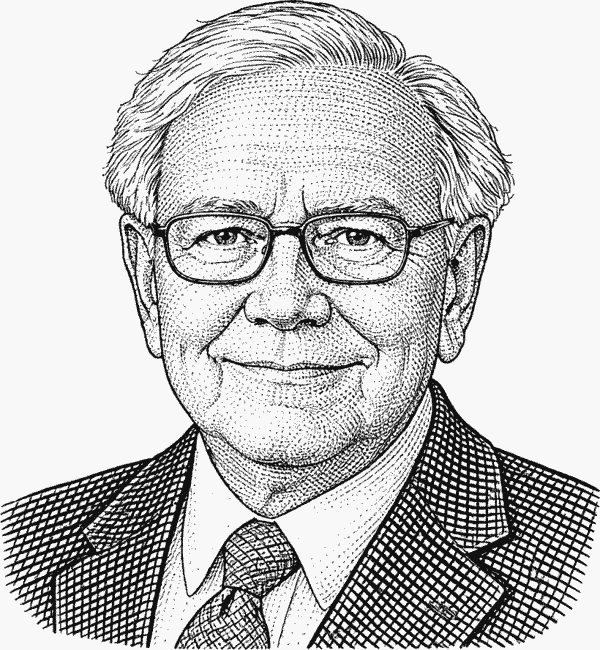
Warren Buffett quote portrait about valuation

Warren Buffett

Ignore daily price movements.

Source: Berkshire Hathaway Letters

Core idea

Buffett urges investors to ignore short-term stock price fluctuations and instead focus on a companys long-term business fundamentals, intrinsic value, and sustained competitive advantages.

Practical application

Apply this by reviewing businesses quarterly, not daily; track earnings, cash flow, and competitive position, and invest regularly instead of reacting to every price swing or headline.

Why it matters

The insight is that real investment success comes from judging businesses like private owners would, by long-term economics and durability, not by short-term stock market noise.

Bill Miller quote portrait about valuation, investing

Bill Miller

Value investing means really asking what are the best values, and not assuming that because something looks expensive that it is, or assuming that because a stock is down in price and trades at low multiples that it is a bargain.

Source: Speeches / Essays

Core idea

True value investing demands independent analysis of a business's intrinsic worth, rejecting superficial judgments based solely on high prices or low multiples and apparent cheapness.

Practical application

Apply Millers idea by digging into business quality, durability, and cash flows yourself, instead of blindly chasing low PEs or avoiding strong companies just because their stocks look pricey.

Why it matters

Millers quote highlights that genuine value investing is about discerning true business worth through independent analysis, not relying on surface metrics like price levels or conventional valuation multiples.

Benjamin Graham & David Dodd quote portrait about valuation

Benjamin Graham & David Dodd

Speculators buy and sell securities based on whether they believe those securities will next rise or fall in price.

Source: Security Analysis

Core idea

The core idea is that speculators focus solely on predicting short-term price movements, trading on expected rises or falls, rather than analyzing a securitys underlying long-term value.

Practical application

Apply this by refusing to trade on short-term predictions; instead, study businesses deeply, buy with a margin of safety, and hold while prices swing around true underlying value.

Why it matters

It reveals that real investing begins where price guessing ends, shifting attention from market moods to intrinsic value, durability of cash flows, and rational, patient capital allocation.

Benjamin Graham quote portrait about valuation, business

Benjamin Graham

A stock is not just a ticker symbol or an electronic blip; it is an ownership interest in an actual business, with an underlying value that does not depend on its share price.

Source: The Intelligent Investor / Security Analysis

Core idea

A stock is not just a moving price on a screen - it represents ownership in a real business with assets, earnings, and competitive realities. The quote anchors investing in economic substance.

Practical application

Before buying a stock, ask whether you would be comfortable owning the entire company. This mindset pushes you toward understanding the business model instead of obsessing over the ticker.

Why it matters

The deeper message is that speculation begins when ownership thinking disappears. Graham is trying to move the reader away from trading mentality and back toward business analysis.

Seth Klarman quote portrait about valuation, investing

Seth Klarman

Value investing combines the conservative analysis of underlying value with the requisite discipline and patience to buy only when a sufficient discount from that value is available.

Source: Margin of Safety

Core idea

Value investing means carefully estimating a businesss true worth, then patiently waiting to buy only when its market price is significantly below that conservatively assessed intrinsic value.

Practical application

Apply this by researching businesses conservatively, valuing them realistically, then waiting with discipline and patience to buy only when the market offers a clear, meaningful discount.

Why it matters

The special insight is that investing success comes from rigorous valuation plus emotional discipline to act only when markets misprice quality businesses at clearly favorable, risk-buffering discounts.

Howard Marks quote portrait about investing, psychology

Howard Marks

Value is not a number - it's an opinion. When optimism prevails, prices can exceed value. When pessimism dominates, prices can fall below value.

Source: Memos

Core idea

Value is subjective and shifts with investor psychology; market prices swing above or below true worth depending on prevailing optimism or pessimism, so price and value often diverge.

Practical application

Use this quote by constantly asking what assumptions and emotions drive current prices, then buy only when your independent estimate of value comfortably exceeds the market price.

Why it matters

The quote reveals that value is a moving target shaped by crowd psychology, so disciplined investors can profit by exploiting emotional mispricings between perception and underlying worth.

Charlie Munger quote portrait about valuation

Charlie Munger

The idea is to find a mispriced bet.

Source: Art of Stock Picking

Core idea

The core idea is to seek situations where the odds of success and potential payoff are much better than the price suggests, creating positive expected value over time.

Practical application

In real life, apply this by patiently studying businesses to find rare cases where quality and future growth far exceed the current price, then investing decisively yet prudently.

Why it matters

Mungers insight is that sustained investing edge comes not from predicting markets broadly, but from selectively exploiting rare, obvious mispricings where expected value is overwhelmingly in your favor.

Christopher Volk quote portrait about investing, valuation

Christopher Volk

The best investors focus on how businesses actually generate cash.

Source: Speeches / Essays

Core idea

The quote emphasizes that truly successful investors look beyond accounting earnings to understand the real economic engines and cash flow fundamentals that sustainably drive a businesss long-term value.

Practical application

To become a better investor, dig into how a company truly generates and uses cash, since durable, growing cash flows ultimately determine its real value and investment merit.

Why it matters

This quote highlights that superior investing hinges on grasping a businesss true cash economics, not just reported profits, revealing sustainable value, risk, and competitive durability beneath surface metrics.

Sam Zell quote portrait about valuation

Sam Zell

Scarcity drives value.

Source: Am I Being Too Subtle

Core idea

When something is scarce or hard to get, people value it more, so limited supply or uniqueness becomes a powerful driver of higher prices, demand, and opportunity.

Practical application

As an investor, seek businesses with genuine scarcity - limited supply, unique assets, or durable competitive advantages - because constrained availability often supports stronger pricing power, margins, and long-term returns.

Why it matters

Scarcity is not just a constraint but a strategic asset; when supply is truly limited, value concentrates, enabling outsized pricing power, bargaining leverage, and long-term wealth creation.

Phillip Fisher quote portrait about markets, valuation

Phillip Fisher

The stock market is filled with individuals who know the price of everything, but the value of nothing.

Source: Speeches / Essays

Core idea

Fisher warns that many investors obsess over short-term stock prices instead of understanding a companys true underlying business quality, long-term prospects, and intrinsic value.

Practical application

To be a better investor, spend more time understanding a companys business, durability, and competitive edge than reacting to daily price moves or market noise.

Why it matters

Fisher insightfully separates market price from business reality, urging investors to cultivate independent judgment about long-term value instead of following short-term crowd-driven quotations.

Michael Foster quote portrait about valuation

Michael Foster

It's critical that we do not let high yields distract us from overvaluation.

Source:

Core idea

High investment yields can be tempting, but they may hide overpriced assets; investors must focus on underlying value rather than being blinded by attractive income alone.

Practical application

In real life, apply this by always checking a companys fundamentals, valuation, and risk before buying, instead of chasing the highest yield or dividend headline.

Why it matters

The special insight is that true investment wisdom requires resisting the lure of eye-catching yields and instead prioritizing rigorous valuation, fundamentals, and risk analysis to protect long-term capital.

John Neff quote portrait about valuation, investing

John Neff

It's not always easy to do what's not popular, but that's where you make your money. Buy stocks that look bad to less careful investors and hang on until their real value is recognized.

Source: Speeches / Essays

Core idea

Profits often come from unpopular, misunderstood stocks; by researching carefully, buying what others avoid, and waiting patiently, investors can profit when true value is eventually recognized.

Practical application

Apply this by researching solid but unpopular companies, buying when others are fearful, and patiently holding until improving fundamentals attract broader recognition and raise the stock price.

Why it matters

The special insight is that disciplined contrarian investing in fundamentally sound but unpopular stocks, combined with patience, can unlock outsized gains when the market eventually corrects its mispricing.

Donald Trump quote portrait about valuation

Donald Trump

It goes to show you the value of credibility.

Source: The Art of the Deal

Core idea

Without credibility, even impressive achievements lose impact; consistent honesty and reliability build trust, which is the essential foundation for lasting influence, negotiation power, and long-term success.

Practical application

As an investor, your track record and honesty matter more than any single win; consistent transparency, research, and discipline build the credibility that attracts capital and long-term opportunities.

Why it matters

Credibility quietly compounds like interest; without it, achievements remain fragile and temporary, but with it, every action, promise, and result gains outsized weight, leverage, and lasting influence.

Frequently asked questions

How Readers Can Use Valuation Quotes Well

What makes a valuation quote worth revisiting?

The best valuation quotes compress a durable principle into a sentence or two and remain useful across cycles.

How should I use quotes like these in real life?

Use them as prompts for process rather than slogans. A good quote becomes valuable when it changes how you study a business, value risk, or respond to volatility.

Why do so many of these quotes focus on temperament?

Because behavior often determines results. Knowing the right principle is not enough if fear, greed, impatience, or overconfidence push you to act badly.

What is the most useful way to study a page like this?

Read slowly, compare themes, and decide which idea belongs on your own checklist. The value is not in memorizing every line, but in applying the best ones consistently.

Which investors appear most often in collections like this?

Readers often see recurring insights from Warren Buffett, Benjamin Graham, Charlie Munger, Peter Lynch, Seth Klarman, Howard Marks, and other durable thinkers.

Are these quotes investment advice?

No. They are educational material meant to help readers think more clearly about business and investing principles.

Why pair each quote with commentary?

Context turns a memorable sentence into a usable tool. Commentary helps readers understand the principle, apply it, and avoid treating it as a bumper sticker.